All American Sports Cafe
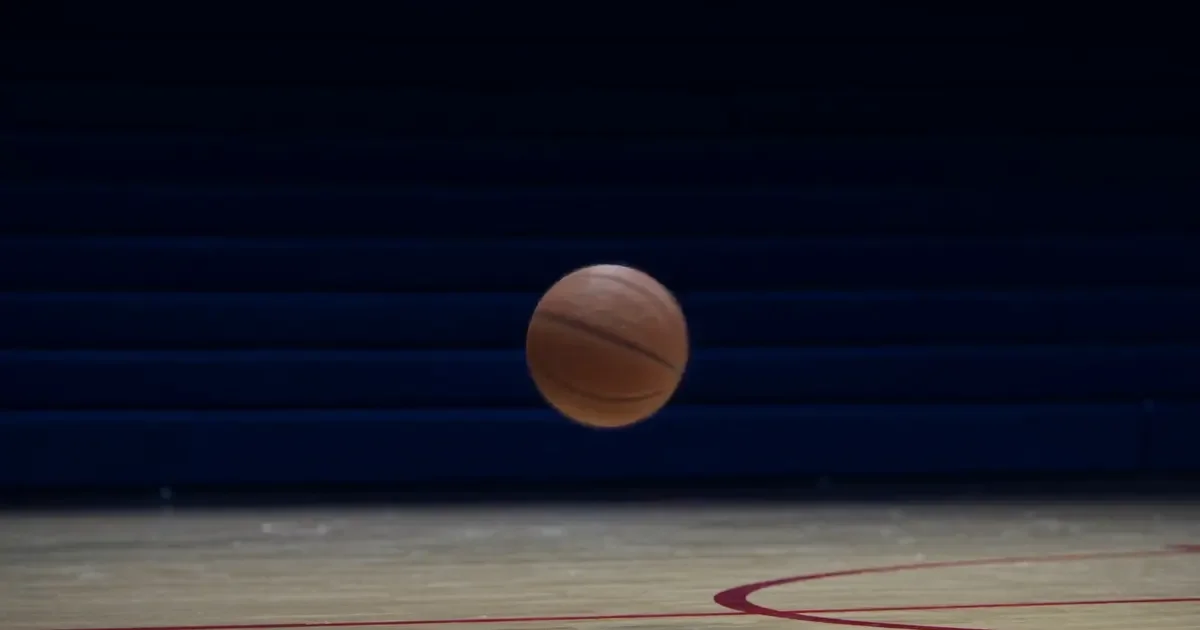
Traveling in basketball is a violation called when a player holding the ball moves his feet more than the rules allow: in the NBA, that means taking more than two steps after gathering the ball, or lifting the pivot foot and putting it back down before passing, shooting or starting a dribble. The penalty is a turnover, with the other team getting the ball out of bounds.
Traveling is the most argued-about violation in the sport, mostly because the "two steps" are counted from a moment called the gather, which is hard to see at full speed. This guide explains the gather, step counting and the pivot foot using the 2026-27 NBA rulebook on official.nba.com, then covers the other common ball-handling violations (double dribble and carrying) and the three-second and five-second rules, and closes with the real differences in college (NCAA) and international (FIBA) basketball.
What the NBA rulebook says about traveling
The definition sits in Rule 4, Section IX: traveling is "progressing in any direction while in possession of the ball, which is in excess of prescribed limits." Those limits are spelled out in Rule 10, Section XIII, which covers every way a player can travel:
- Taking more than the allowed steps after gathering the ball.
- Lifting the pivot foot before the ball leaves the hand when starting a dribble.
- Lifting the pivot foot and then putting it back on the floor before passing or shooting.
- Gaining an advantage by sliding after falling to the floor with the ball.
- Being the first to touch your own shot when it misses the rim, backboard and every other player (an air ball you catch yourself), or your own pass that touched nobody.
- Touching the floor twice in a row with the same foot after ending a dribble or gaining control of the ball, which the rule calls a hop.
The penalty is the same in every case: loss of the ball. The other team inbounds it from the sideline nearest the spot of the violation, no nearer the baseline than the free throw line extended. The game clock stops on the whistle, and the new possession brings a fresh shot clock (see how long an NBA game lasts for how the 24-second clock works).
The gather and the two steps
Everything about step counting depends on the gather, the moment a player is considered to have control of the ball. The NBA wrote a formal definition into the rulebook in September 2019, when the Board of Governors approved new wording that the league said did not change the rule itself but brought the text in line with how referees were already calling it. That definition is now Rule 4, Section III:
- For a player who catches a pass or picks up a loose ball, the gather is the point where he has enough control to hold the ball, change hands, pass or shoot, or when he cradles it against his body.
- For a player who is dribbling, the gather is the point where he puts two hands on the ball or otherwise lets it come to rest, puts a hand under the ball and brings it to a pause, or otherwise gains enough control to hold it, change hands, pass or shoot.
Once the gather happens, Rule 10, Section XIII allows two steps to come to a stop, pass or shoot. The rule defines the steps precisely. The first step occurs when a foot, or both feet, touch the floor after gaining control of the ball. The second step occurs when the other foot touches the floor after that, or when both feet touch the floor at the same time.
The phrase "after gaining control" is what fans call the gather step or zero step, a nickname that does not appear in the rulebook. A foot that is already on the floor when the player gathers the ball does not count as step one. Only the foot that lands next does.
There is one tighter limit. A player who catches the ball on the move and has not dribbled yet may take only one step before the ball has to leave his hand to start a dribble. Two steps are fine for stopping, passing or shooting, but not for a delayed first dribble.
Euro steps, jump stops and the hop
Most flashy footwork is legal because it fits inside the two steps. A Euro step is simply step one in one direction and step two in another, so the rule has no problem with it.
Jump stops follow their own logic in the same section:
- A player who stops on step one with both feet landing at the same time may pivot on either foot.
- A player who lands one foot first may only pivot on that foot.
- A player who jumps off one foot on step one and lands on both feet together for step two may not pivot at all. If he lifts one or both feet, the ball has to be gone before they come back down.
- A player who jumps with both feet after a two-footed stop must release the ball before either foot lands.
The hop is the one move that fails no matter how few steps it uses. Landing on the same foot twice in a row after ending a dribble is a travel, even if the total number of floor contacts is two.
The pivot foot
A player who is standing still with the ball has a pivot foot, the foot that stays planted while the other one steps. Rule 4, Section VIII defines a pivot as stepping once or more than once in any direction with the same foot while the other foot stays in contact with the floor.
The rules for using it are short:
- A player who catches the ball while standing still may choose either foot as the pivot foot.
- To start a dribble, the ball must be out of his hand before the pivot foot leaves the floor.
- He may lift the pivot foot to pass or shoot, for example on a jump shot, but the ball must be released before that foot returns to the floor.
- If he drops the ball while in the air, he may not be the first to touch it.
The most common travel in a real game is a pivot foot that moves too early. A player facing up a defender jabs, shifts his weight and slides or lifts the pivot foot a split second before the ball leaves his hand on the first dribble. It is small and quick, which is why it is often missed. College officials are being told to watch exactly this: the NCAA men's rules book for 2026-27 lists "pre-dribble and split-step travels" as a point of emphasis, and in May 2026 the national coordinator of men's officials told the rules committee that traveling is one of the areas officials will prioritize in 2026-27.
Double dribble and carrying
Traveling covers the feet. Rule 10, Section II covers the hands, and it is where two other common violations live. A dribble, in Rule 4, Section II, is movement of the ball caused by a player in control who throws or taps it to the floor. It ends when the dribbler touches the ball with both hands at once, lets it come to rest, shoots, passes, loses control or otherwise gathers it.
A double dribble is dribbling again after voluntarily ending the first dribble. Pick the ball up with two hands, then put it back on the floor, and the whistle blows. A player may start a new dribble only when he lost control because of:
- A shot that touches the backboard or rim.
- An opponent touching the ball.
- A pass or fumble that touches his backboard or rim, or is touched by another player.
Carrying, also called palming, is the other half of the rule. A dribbler may not put any part of his hand under the ball and either carry it from one point to another or bring it to a pause and then keep dribbling. The ball can be handled firmly from the top or side; once the hand rotates under it and the ball comes to rest, the dribble has effectively ended, so continuing to bounce it is illegal. The same section also bans running with the ball without dribbling it, and stops a dribbler who steps out of bounds from coming back inbounds and carrying on.
Both violations are punished like a travel: loss of the ball on the sideline nearest the spot, no nearer the baseline than the free throw line extended.
Three-second and five-second rules
Time limits are the other family of violations fans hear about, and the NBA has several:
- Offensive three seconds (Rule 10, Section VI): an offensive player may not stay in the free throw lane, the painted area, for more than three seconds while his team controls the ball in the frontcourt. A player who is in the act of shooting at the end of the third second gets an allowance. Penalty: loss of the ball.
- Defensive three seconds (Rule 10, Section VII): a defender may not stay in the lane for more than three seconds unless he is actively guarding an opponent, meaning within arm's length and in a guarding position. This is a technical foul rather than a turnover: the other team shoots one free throw and keeps the ball.
- Five-second back-to-the-basket (Rule 10, Section XVI): an offensive player below the free throw line extended may not dribble with his back or side to the basket for more than five seconds. Penalty: loss of the ball.
- Five seconds on a throw-in (Rule 10, Section III): the player inbounding the ball has five seconds to release it.
- Eight seconds (Rule 10, Section VIII): a team has eight seconds to move the ball from its backcourt into its frontcourt.
The NBA has no general five-second count on a player who simply holds the ball while closely guarded. That rule exists in college and FIBA basketball, which is one of the clearest differences between the levels.
NBA vs college vs FIBA: the real differences
The core idea of traveling is the same everywhere, and the NBA and FIBA now use nearly identical wording. The differences are mostly in the time limits and a few edge cases:
- Steps and the gather: the 2026 FIBA Official Basketball Rules (Article 25), in force from October 1, 2026, allow two steps after catching the ball while moving or ending a dribble and count the first step the same way the NBA does, from the first foot to touch the floor after gaining control. The 2026-27 NCAA men's rules (Rule 9, Section 5) do not use the word gather or count steps; they describe how a moving player stops and establishes a pivot foot depending on how he lands.
- Falling with the ball: FIBA (Article 25.2.2) says it is legal to fall and slide while holding the ball, but a violation to roll over or try to stand up with it. The NBA says a player may not gain an advantage by sliding, and the NCAA calls it traveling when a player falls without keeping a pivot foot.
- Closely guarded: in NCAA men's basketball (Rule 9, Section 14), a player holding the ball in the frontcourt with a defender within 6 feet has five seconds to pass, shoot or dribble. In FIBA (Article 27) the distance is no more than 1 meter, about 3.3 feet. The NBA has no such count.
- Backcourt count: the NBA and FIBA give a team 8 seconds to cross half court; NCAA men's basketball allows 10.
- Defensive three seconds: only the NBA has it. College and FIBA basketball limit only the offense, so a defender can stand in the lane for as long as he likes.
- Double dribble and carrying: the rules read almost the same at every level. FIBA's Article 24 uses the same "hand under the ball" wording as the NBA, and the NCAA's Rule 4, Section 13 says a dribble ends when the dribbler "carries/palms" the ball by letting it come to rest.
If you watch both NBA and college games, the step count rarely looks different in practice. The time limits are where you will notice it.
Quick reference: basketball violations at a glance
Keep this list handy for the next disputed whistle. All rules are from the 2026-27 NBA rulebook unless noted.
- Traveling: more than two steps after the gather, a moving pivot foot, a hop, or catching your own air ball. Penalty: loss of the ball.
- Gather: the moment the player has enough control to hold, pass or shoot, or puts two hands on the ball. Steps count from the first foot to land after it.
- Double dribble: dribbling again after picking the ball up. Penalty: loss of the ball.
- Carrying or palming: a hand under the ball that carries it or pauses it during a dribble. Penalty: loss of the ball.
- Offensive three seconds in the lane: loss of the ball. Defensive three seconds: technical foul, one free throw, offense keeps the ball.
- Five seconds: back-to-the-basket dribbling below the free throw line extended, and on throw-ins. College and FIBA add a closely guarded count.
- Backcourt: 8 seconds in the NBA and FIBA, 10 in NCAA men's games.
Every sport has its own technical violation that confuses newcomers. In baseball it is the balk. And once you can follow the whistles, the box score is the next step: start with what a triple-double is.
Traveling and double dribble: common questions
How many steps can you take in the NBA?
Two steps after the gather, the moment a player gains control of the ball, to stop, pass or shoot. A foot that is already on the floor at the gather does not count. A player who catches the ball on the move and wants to start a dribble may take only one step before releasing the ball.
What is a gather step in basketball?
Gather step, or zero step, is a fan nickname for the step a player takes while gaining control of the ball. Under the NBA rule, the first counted step is the first foot to touch the floor after the gather, so a foot already planted during the gather is not counted.
What is a double dribble?
A double dribble is starting a second dribble after you have voluntarily ended the first one, for example by holding the ball with both hands. It is a violation, and the other team gets the ball. A new dribble is allowed only if the ball touched the rim or backboard on a shot, an opponent touched it, or a pass or fumble was touched by another player.
Is a jump stop a travel?
No. A player may land on both feet at the same time and then pivot on either foot. A player who jumps off one foot and lands on both counts that as two steps and may not pivot; if he lifts a foot again, he has to pass or shoot before it lands.
Is carrying the same as palming?
Yes, the two words describe the same violation: putting a hand under the ball during a dribble and carrying it or pausing it before dribbling again. The NBA rulebook covers it in Rule 10, Section II, and the penalty is loss of the ball.