All American Sports Cafe
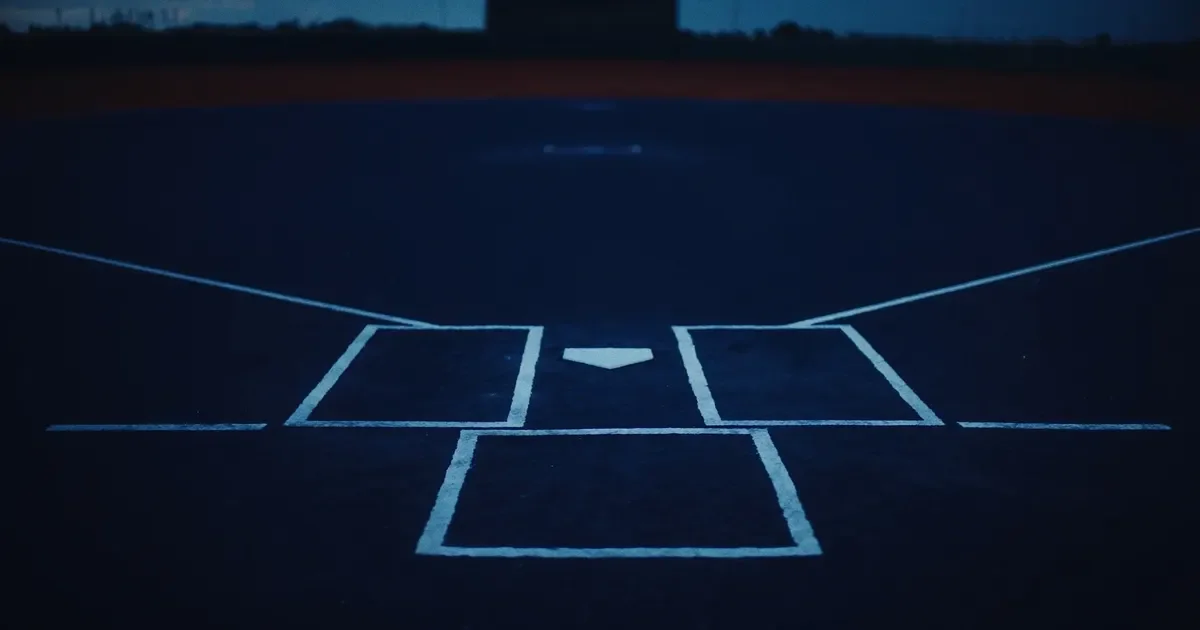
A cycle in baseball is when one batter hits a single, a double, a triple and a home run in the same game. The hits can come in any order, and extra hits do not matter, as long as all four kinds show up in the box score by the final out.
It sounds simple, and three of the four pieces happen every night. The triple is the problem. This guide covers exactly what counts, the scoring quirks that can cost a batter a cycle, the natural and reverse versions, why it is so hard to finish, and how many there have been, using only counts we could check against a named record source.
What counts toward a cycle
A cycle is not an official statistic with its own rule. It is a feat built from four ordinary hit types, and each one is decided by the official scorer under Rule 9.06 of the Official Baseball Rules. That rule says a hit is a single if the batter stops at first, a double if he stops at second, a triple if he stops at third, and a home run if he touches all the bases and scores, as long as no error or putout is involved.
The basic requirements:
- All four hits come in the same game, by the same batter
- Order does not matter
- Extra hits are fine: a 5-for-5 day with two singles still counts
- Only official hits count, so reaching on an error, a walk or a fielder's choice adds nothing
- An inside-the-park home run is a home run, and a ground-rule double is a double
A four-hit cycle is the tightest version. If a batter has a single, double, triple and homer in four at-bats, his day adds up to 1 + 2 + 3 + 4 = 10 total bases, which is the minimum for any cycle.
Scoring quirks that can cost a cycle
Because the scorer decides what kind of hit it was, a few rules can turn a would-be double or triple into something less:
- If a batter stretches a hit only because the defense throws to another base, the scorer can call it a single plus an advance on the throw, not a double.
- The rulebook comment to Rule 9.06 says the batter does not get a triple when a runner ahead of him is thrown out at home, and does not get a double when a runner trying to go from first is thrown out at third.
- If a batter slides past second or third and is tagged out, he gets credit only for the last base he held safely.
- If he misses a base and is called out on appeal, the hit is reduced to the last base he reached safely.
- On a game-ending hit, Rule 9.06(f) generally limits the batter to the bases needed to bring home the winning run, though he keeps bases touched in the natural course of the play. A walk-off home run hit over the fence is the exception: under Rule 9.06(g), everyone scores.
The last point matters more than you might think. A hitter who needs a triple for the cycle and drives a ball into the gap with the winning run on third in the bottom of the ninth may end up with a game-winning single.
Natural cycles and reverse cycles
A natural cycle is one where the hits come in order: single, then double, then triple, then home run. A reverse natural cycle runs the other way: home run, triple, double, single.
Natural cycles are scarce. MLB's count, as cited in MLB.com's Rangers history and by Opta's The Analyst, puts the number of natural cycles in the modern era (since 1901) at 14. The most recent is still Gary Matthews Jr. of the Texas Rangers, on September 13, 2006, at Detroit. The Retrosheet play-by-play of that game shows the order: a single in the first inning, then a double, then a triple, and a home run in the sixth to finish it.
The most recent reverse cycle we could confirm came on June 15, 2026, when Pete Crow-Armstrong of the Chicago Cubs led off with a home run against the Colorado Rockies at Wrigley Field, tripled in the third, doubled in the fifth and singled in the seventh. ESPN reported him as the fourth player in the divisional era, which began in 1969, to complete a cycle in reverse order.
Why the triple makes it rare
Singles, doubles and home runs are routine. Triples are not. A triple needs a ball hit into a gap or off a strange wall angle, a fielder who cannot get to it cleanly, and a batter fast enough to reach third. Many power hitters go entire seasons without one.
MLB's official regular-season totals for 2026 make the point. Across all 30 teams there were 163,329 at-bats, and the hits broke down like this:
- Singles: 26,110, about one every 6.3 at-bats
- Doubles: 7,493, about one every 21.8 at-bats
- Home runs: 5,575, about one every 29.3 at-bats
- Triples: 671, about one every 243 at-bats
There were more than eight home runs for every triple. Spread across 30 teams, 671 triples works out to about 22 per club for an entire season, or roughly one every seven games for a whole lineup.
That is why so many near-misses end the same way. A hitter with a single, double and homer by the sixth inning often gets one or two more trips to the plate, and needs the one hit type that only shows up every couple of hundred at-bats. Fast hitters with some power have a real edge, because they can turn a ball into the gap into a triple more often than slower sluggers can.
How rare is hitting for the cycle
The cleanest count we could verify is Retrosheet's list of major league cycles, which was last updated on November 25, 2025, and covers games through the 2025 season. It lists 351 cycles. Two details shape that number:
- It includes George Hall's 1876 cycle, which some baseball historians dispute.
- It includes the only postseason cycle on the list, by Brock Holt of the Boston Red Sox on October 8, 2018, in the American League Division Series at Yankee Stadium.
Take those two out and the list holds 349 regular-season cycles from 1882 through 2025. Other sources draw the line slightly differently, so you will see totals that differ by a few depending on whether the 1876 game and the postseason are counted.
The 2026 season added more. The Associated Press reported that JJ Bleday of the Cincinnati Reds was the fourth major leaguer to hit for the cycle in 2026 when he did it on August 22 against the Arizona Diamondbacks, after Pete Crow-Armstrong (June 15), Bryce Harper of the Philadelphia Phillies (June 20) and Tristan Peters of the Chicago White Sox (July 10).
Cycles per season
Counting Retrosheet's list season by season shows how much the number bounces around:
- 2017: 7 cycles
- 2020: 0, in a season shortened by the pandemic
- 2023: 5
- 2024: 4
- 2025: 2
A full MLB season has 2,430 regular-season games (30 teams x 162 games / 2). Even a busy year with seven cycles means one in several hundred games, and every one of those games has 18 starting hitters taking a shot. For more on how that 162-game schedule is built, see how many games are in an MLB season.
Records and notable cycles
A few records stand out on the Retrosheet list:
- Most cycles in a career: 3. Six players share it: John Reilly, Bob Meusel, Babe Herman, Adrián Beltré, Trea Turner and Christian Yelich.
- Twice in one season against the same team: Yelich hit both of his 2018 cycles against the Cincinnati Reds, on August 29 and September 17, and his third came against the Reds as well, in 2022.
- Postseason: one. Brock Holt's cycle in Game 3 of the 2018 ALDS is the only one on the list.
Two of the 2026 cycles had their own twist. Pete Crow-Armstrong's came in reverse order, as described above. Tristan Peters of the White Sox finished his against the Athletics on July 10 with two hits in the same inning, a home run and a triple in the seventh. The AP, citing MLB, reported him as only the third player since 1961 to complete a cycle with two hits in one inning.
How it compares with other single-game feats
Every sport has a box-score achievement that fans circle. In hockey it is three goals in one game, explained in our guide to the hat trick in hockey. In basketball it is reaching double figures in three categories, covered in what is a triple-double.
The cycle is a little different from both. It is not about volume. A player can hit four home runs and not have a cycle. A player can go 3-for-4 with a double, triple and homer, a far better day than most cycles, and miss because he never singled. The cycle rewards variety, which is part of its charm and part of why plenty of analysts treat it as a fun curiosity rather than a measure of how good a game really was.
At the very top, a cycle still means a big day at the plate. Ten total bases from four at-bats works out to a slugging percentage of 2.500 for the game. If you want to see how those bases feed into a hitter's season numbers, our OPS guide shows the full calculation.
Cycles in the minors and in college
The definition is the same at every level of the sport, from Little League to the minor leagues to college. The four hit types are scored the same way, so a minor leaguer's cycle looks exactly like a big leaguer's in the box score.
When people talk about how many cycles there have been, though, they almost always mean major league regular-season games. Minor league and college cycles are recorded by their own leagues, teams and schools, not in the MLB counts above.
Cycle checklist for watching a game
If a hitter has three of the four by the middle innings, here is what to keep in mind:
- He needs the one missing hit type, in any order, before the game ends
- Count his likely remaining plate appearances: a top-of-the-order hitter usually gets four or five in a nine-inning game, and extra innings can add more (see how many innings are in a baseball game)
- If he needs a single, watch whether he stops at first on a ball he could stretch
- If he needs a triple, a ball in the gap is his best chance, and a throw to another base can still cost him
- A walk-off hit may be scored as less than it looks, except for a home run over the fence
- Errors, walks and fielder's choices never count
Cycle questions
What does hitting for the cycle mean?
It means one batter collects a single, a double, a triple and a home run in the same game. The hits can come in any order, and extra hits do not cancel it.
What is a natural cycle?
A cycle where the hits come in order: single, double, triple, then home run. MLB counts 14 in the modern era, and the most recent was Gary Matthews Jr. of the Texas Rangers on September 13, 2006.
How many cycles have there been in MLB history?
Retrosheet's list, updated November 25, 2025, shows 351 through the 2025 season, including one postseason cycle and a disputed 1876 game. The AP counted four more in 2026 through JJ Bleday's cycle on August 22.
Does an inside-the-park home run count for the cycle?
Yes. If the official scorer credits a home run, it counts, whether the ball left the park or not. A ground-rule double also counts as a double.
Who has the most cycles?
Six players are tied with three: John Reilly, Bob Meusel, Babe Herman, Adrián Beltré, Trea Turner and Christian Yelich.
Has anyone hit for the cycle in the playoffs?
Once. Brock Holt of the Boston Red Sox did it against the New York Yankees on October 8, 2018, in Game 3 of the American League Division Series.